// Case study
SyncOS
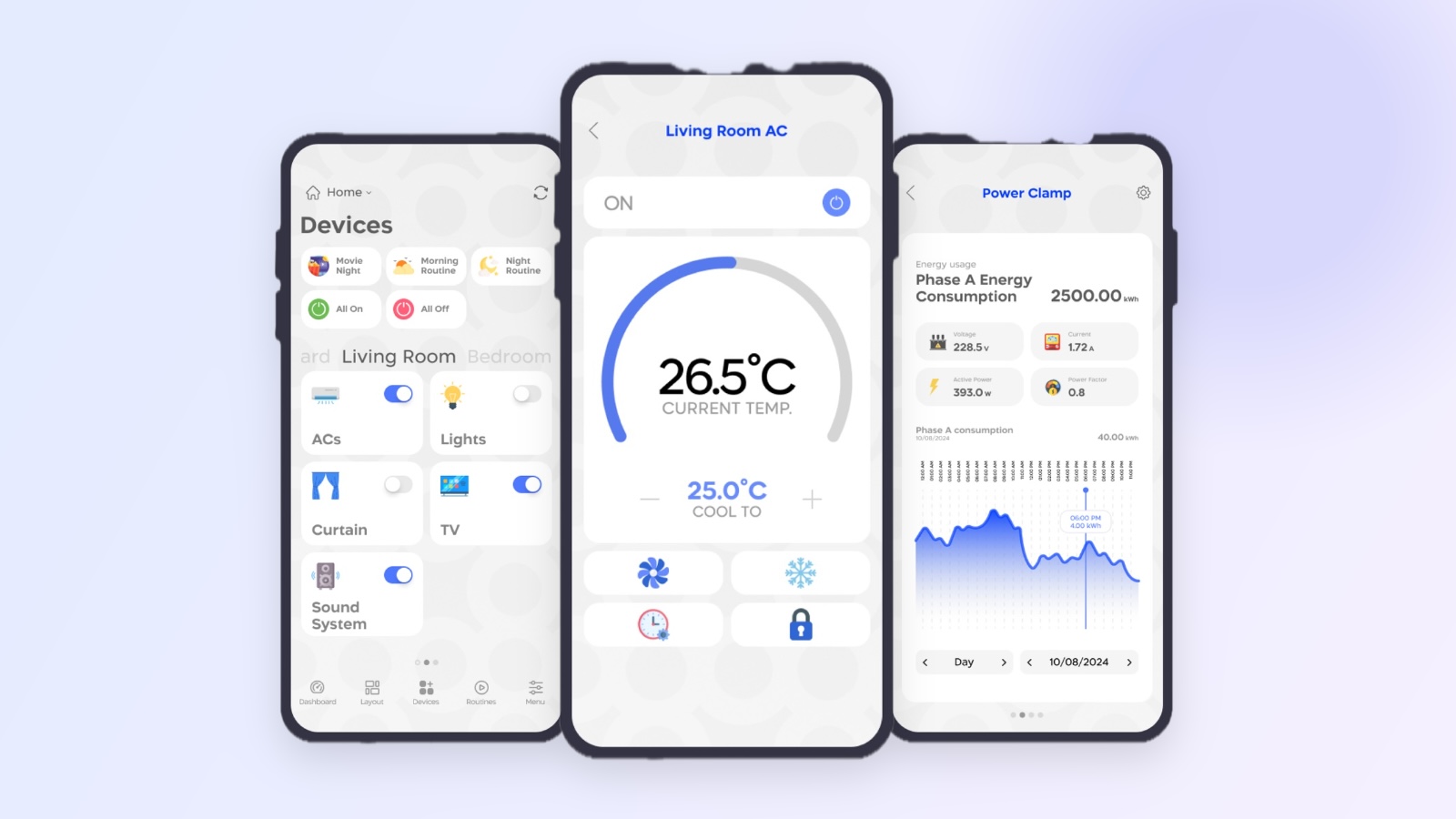
White-label IoT platform for smart buildings and homes: device connectivity, automations, mobile apps and analytics.
Visit the live site- Client
- Syncrow IoT Solutions
- My role
- Backend Engineer, then Backend & Infrastructure Lead
- Period
- 2025 – Present
- Stack
- AWS, Terraform, PostgreSQL, TimescaleDB, Redis, WebSockets, MQTT, LoRaWAN, Tuya IoT
// Overview
What this is
A platform for connecting, automating and monitoring smart buildings and homes, covering device connectivity, automations, mobile apps and analytics. I lead its backend and infrastructure.
SyncOS is Syncrow's IoT smart-building and smart-home platform, built on Tuya-based infrastructure. I joined as a Backend Engineer in April 2025 and was promoted to Backend & Infrastructure Lead in early 2026.
I own the overall system architecture and the backend and cloud infrastructure, run the design review meetings where designs are approved before implementation, and lead a team of 2–3 engineers.
Major work so far: bringing every environment onto AWS in Terraform, closing all Azure resources, replacing the Firebase real-time database with Redis and WebSockets (cutting monthly infrastructure costs by 61.5%), designing the white-label foundation that lets one codebase power multiple brands, and moving device telemetry to TimescaleDB on top of PostgreSQL.
// Results
What changed
- 61.5%
- Monthly infrastructure cost reduction
- 100GB+
- PostgreSQL databases run in production
- 3
- Environments on AWS, 100% in Terraform
- <1 yr
- From engineer to lead
// Problem
Challenges and solutions
The challenges
- C01Production did not match the staging and dev environments, so every new release risked breaking something that had worked in testing
- C02Spend was split across Azure, the Firebase real-time database and AWS, with unused services still running
- C03A customer asked for their own branded application, and the platform had to serve more than one brand without splitting the codebase
- C04One large table collected every device log, and analytical queries on it became slow
How I solved them
- S01Moved dev and staging from Azure to AWS and defined all three environments in the same Terraform code, so they match
- S02Removed spend on unused services, closed every Azure resource, and replaced the Firebase real-time database with Redis and WebSockets, cutting monthly infrastructure costs by 61.5%
- S03Built the multi-tenancy layers and the versioning around them: a tenant-aware backend and automations engine, tenant resolution by project, and build-time branded apps. The first branded application is about to launch, and the platform is ready for more brands
- S04Looked for a fix that needed minimal migration and put TimescaleDB on top of PostgreSQL, cutting query time by about 50%. It is what runs today
// Scope
What it does
- Device connectivity across LoRaWAN and Tuya hardware
- A tenant-aware backend and automations engine for multiple brands
- Build-time branded mobile apps and per-brand email domains
- Real-time device state, and analytics access for the data team
// Role
What I built
- Own the system architecture and run design reviews before implementation
- Moved dev and staging from Azure to AWS and closed all Azure resources; all three environments now run on AWS in Terraform, with the IaC repository under CI
- Designed the white-label foundation, with a brand configuration schema and an implementation guide
- Moved device telemetry to TimescaleDB on PostgreSQL and run PostgreSQL at the 100GB+ scale
// Stack
Technologies
My current role. See the full role.